


How to Organize Small Apartment Clutter
Table of Contents
- Why Small Apartments Get Cluttered (and How to Fix It)
- How to Declutter a Small Apartment: Room-by-Room Strategy
- Small Apartment Storage Ideas That Actually Work
- Create a Decluttering Checklist for Small Spaces
- Daily Habits to Keep an Apartment Organized
- Decision Rules: What to Keep, Donate, Sell, or Discard
- Low-Cost, Renter-Safe Organization Solutions
- Frequently Asked Questions
Last Updated: October 11, 2026
Why Small Apartments Get Cluttered (and How to Fix It)
Small apartments accumulate clutter faster because limited square footage makes belongings pile up quickly. At MN AMERICA, we understand that to organize small apartment clutter isn't just about tidiness, it's about reclaiming your space and making your home livable again.
The real problem isn't that you own too much stuff, it's that you haven't created systems to manage what you have. Small spaces demand intentional decisions about what stays, what goes, and where everything lives.
Most people try to organize without decluttering first. You can't organize chaos. Remove items you don't use, then organize what remains, this saves time and makes your space functional.
How to Declutter a Small Apartment: Room-by-Room Strategy
A room-by-room approach prevents overwhelm and builds momentum by giving you quick wins.
Start with your easiest room, usually the bedroom or bathroom, because these have fewer items and clearer purposes.
Start with Your Bedroom
Your bedroom should be a calm retreat. Remove everything that doesn't belong: work items, hobby supplies, unworn clothes.
Pull out every item from your closet and drawers. Sort into three piles: keep, donate, and discard. If you haven't worn something in a year, it's taking up space you need.
Prioritize your bed, a clutter-free bed makes the entire room feel organized. Keep only daily-use items on the nightstand and dresser.
Use under-bed storage for seasonal items or extra bedding to maximize closet space.
Move to the Kitchen and Pantry
Start with your pantry. Remove expired items, duplicate containers, and unused gadgets.
Group similar items together and use clear containers so you can see what you have. This prevents buying duplicates.
Empty your junk drawer completely. Keep only useful items: scissors, tape, working pens, and small tools.
Store everyday dishes at eye level and move specialty items to higher shelves.
Tackle the Living Room and Entryway
Remove magazines, books, and decorations you don't love. Keep only items that bring you joy or serve a purpose.
Create a drop zone with hooks for coats and bags, and a basket for keys and mail. This prevents clutter from spreading.
Remove unnecessary furniture. Every piece should provide storage or seating.
Small Apartment Storage Ideas That Actually Work
Wall-mounted shelves and vertical storage transform small spaces by holding items you need to access regularly.
Use Vertical Space and Wall-Mounted Shelves
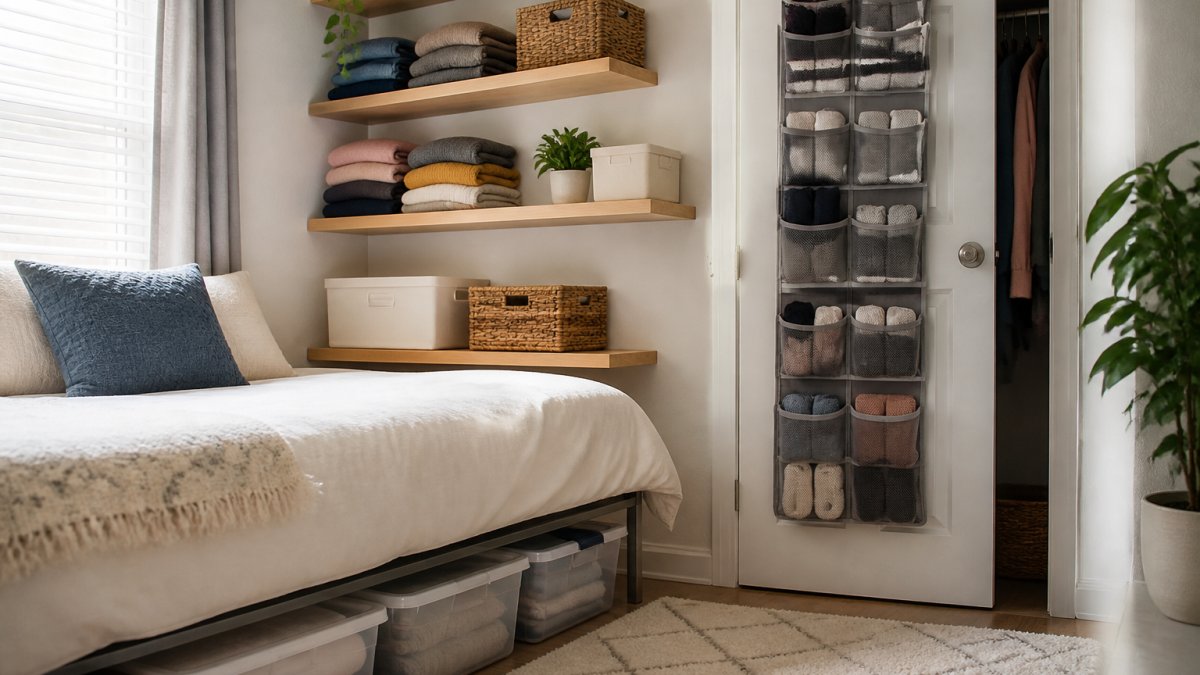
Floating shelves store items while keeping floor space clear and making rooms feel larger.
Over-the-door organizers add storage without taking up wall space for shoes, cleaning supplies, or spices.
Wall hooks hold coats, bags, and hats, preventing items from piling on chairs or beds. They're inexpensive and renter-friendly.
Maximize Closet and Under-Bed Storage
Install hooks or slim shelving inside closet doors for shoes, belts, and scarves to free up floor space.
Use flat storage containers under beds for seasonal clothing and blankets. Label each container so you know what's inside.
Vertical shelf dividers organize your closet and let you see everything at once.
Choose Furniture with Built-In Storage
Choose furniture with built-in storage: storage benches, ottomans with drawers, and beds with drawers serve double duty.
A storage coffee table with shelves or drawers keeps your living room surface clear.
Use nightstands with drawers for bedside essentials. Closed storage keeps your bedroom calm.
Create a Decluttering Checklist for Small Spaces
The Four-Pile Sorting System
Sort items into four piles: Keep, Donate, Sell, and Discard. This prevents creating a "maybe" pile.
- Keep: Items you use regularly or that bring you joy.
- Donate: Items in good condition you no longer use.
- Sell: Items with resale value (electronics, furniture, brand-name clothing).
- Discard: Broken items, worn-out clothing, and expired products.
Decision Prompts to Use on Every Item
Ask these questions: Do I use this? Do I love this? Does it serve a purpose? Would I buy this again today? If an item fails three or more, donate, sell, or discard it.
Room-by-Room Checklist with Priority Order
Tackle rooms in this sequence: bedroom closet, bedroom surfaces, bathroom, kitchen pantry, kitchen drawers, living room, and storage closets. Start with your bedroom for quick wins and finish with your entryway for visible impact.
Measurement Checklist Before Buying Organizers
Measure your closet, under-bed clearance, wall space, cabinet interiors, and door dimensions before buying organizers. Write measurements down or take photos to prevent buying items that don't fit.
Travel Vacuum Compression Kit →
Daily Habits to Keep an Apartment Organized
Organization requires a maintenance routine because clutter returns quickly without intentional daily and weekly practices.
The Daily 5-Minute Reset
Spend five minutes each evening returning items to their designated homes: put away dishes, hang up clothes, file papers, and clear surfaces.
The One-In-One-Out Rule
When you bring something new into your apartment, remove something old. This keeps your total item count stable and prevents gradual buildup.
- Buy a new shirt? Donate or discard an old one.
- Bring home a book? Remove one you've already read.
- Purchase a kitchen gadget? Get rid of a duplicate or unused tool.
This rule works because it makes you conscious of consumption. You'll think twice before buying something if you know you'll have to remove something else.
The Weekly 15-Minute Surface Sweep
Once a week, spend 15 minutes wiping down and clearing surfaces.
- Wipe down tables, desks, and counters.
- Remove items that have migrated to surfaces (mail, clothes, dishes, books).
- Return those items to their proper storage locations.
- Identify any items you've been meaning to donate or discard and move them to your donation box.
Choose a specific day, Sunday evening or Friday afternoon, so the habit becomes automatic. A clean surface is harder to clutter, so this weekly reset maintains momentum.
The Donation Box System
Create a permanent donation box in a closet or corner of your apartment.
- When the box is full, donate everything at once to a local charity, thrift store, or donation center.
- This prevents items from sitting around for weeks and becoming part of the clutter again.
- A full box typically represents 20-30 items, which feels like meaningful progress.
- Schedule a monthly donation drop-off (first Saturday of the month, for example) so you stay consistent.
The Monthly 30-Minute Deep Scan
Once a month, spend 30 minutes doing a deeper review of one room or category. This catches clutter before it accumulates.
- Month 1: Bedroom closet and drawers
- Month 2: Kitchen cabinets and pantry
- Month 3: Bathroom and under-sink storage
- Month 4: Living room and entryway
- Month 5: Start over with the bedroom
During this scan, pull items forward, check expiration dates, and remove anything you haven't used since the last scan.
The "No New Storage" Rule
Resist the urge to buy new bins, shelves, or organizers to solve clutter. Instead, use what you already have. This forces you to be intentional about what you keep.
- If you need more storage, it's a sign you have too much stuff, not that you need better organizers.
- Before buying a new storage solution, declutter the area first.
- Once you've removed items you don't use, you'll often find you have plenty of storage space.
This rule prevents the common trap of buying organizers that temporarily hide clutter instead of solving the underlying problem.
Decision Rules: What to Keep, Donate, Sell, or Discard
Clear decision rules make decluttering faster. Instead of agonizing over each item, use these questions to decide quickly.
Ask yourself: Do I use this? Do I love this? Does it serve a purpose? If the answer to all three is no, it goes.
Keep items that bring you joy or solve a real problem. Remove items you're keeping out of guilt, obligation, or "what if" thinking.
Donate items in good condition that you don't use. Clothing you don't wear, books you won't read, and kitchen gadgets gathering dust all belong in donations.
Sell items with real value. Electronics, furniture, and brand-name items often sell online. The money makes decluttering feel rewarding instead of wasteful.
Discard broken items, worn-out clothing, and anything unusable. Don't let broken things take up space hoping you'll fix them someday.
Low-Cost, Renter-Safe Organization Solutions
Renters need solutions that don't damage walls or require permanent changes. Fortunately, the best organization tools are affordable and removable.
Command hooks stick to walls without nails. Use them for hanging bags, coats, and organizers. They remove cleanly when you move.
Over-the-door organizers hang on existing doors without installation. They work on bedroom doors, bathroom doors, and closet doors. Remove them instantly when you leave.
Plastic bins and baskets store items without requiring shelving. Stack them in closets, under beds, or on top of existing furniture. They're inexpensive and move with you.
Tension rods fit inside cabinets to create hanging storage for bags or scarves. They adjust to fit your space and require no tools.
The Travel Vacuum Compression Kit from MN AMERICA solves a specific clutter problem: bulky seasonal clothing. When you need to store winter coats or summer blankets, compression bags reduce their volume by up to 80%. This frees closet and under-bed space for everyday items.

The best way to organize small apartment clutter starts with removing items you don't use, then creating homes for what remains. MN AMERICA offers practical solutions like compression bags that maximize your existing storage. The Travel Vacuum Compression Kit makes seasonal storage efficient, freeing up space for daily living. Start decluttering today and reclaim your apartment.
| Strategy | Time Required | Best For |
|---|---|---|
| Wall-mounted shelves | 1-2 hours | Accessing items frequently |
| Under-bed storage | 30 minutes | Seasonal or occasional items |
| Over-the-door organizers | 15 minutes | Shoes, accessories, supplies |
| Compression bags | 20 minutes | Bulky seasonal clothing |
| Drawer dividers | 30 minutes | Keeping stacks organized |
Frequently Asked Questions
How do you organize clutter in a small apartment?
Start by sorting items into keep, donate, sell, and discard categories room by room. Then use vertical space with wall-mounted shelves, maximize closet storage with dividers and organizers, and invest in multifunctional furniture with built-in drawers. The Travel Vacuum Compression Kit ($27.99) helps compress bulky clothing and blankets, freeing up closet and under-bed space. Finally, establish a daily habit of putting items back immediately after use to prevent clutter from returning.
Where should you start when decluttering a small apartment?
Begin with your bedroom, where you spend the most time and can see immediate results. Sort through clothes, bedding, and personal items first. Move to the kitchen and pantry next, as food storage waste is easy to spot and clear quickly. Finish with the living room and entryway, which are most visible to guests. This sequence builds momentum and prevents overwhelm.
What should you get rid of when decluttering a small apartment?
Remove duplicates (multiple can openers, measuring cups), broken or rarely used items, expired food, clothes you haven't worn in a year, and anything that doesn't fit your lifestyle. Ask yourself: Do I use this at least once every six months? Does it serve a purpose? Does it bring me comfort? If the answer is no to any question, it's a candidate for donation or discard. This keeps only items that genuinely add value to your space.
How do you keep a small apartment from getting cluttered again?
Build a daily 5-minute tidying habit: put items back immediately after use, file papers right away, and never leave items on surfaces overnight. Use the one-in-one-out rule: when you bring something new in, remove something old. Schedule a 15-minute weekly reset on Sunday to sort through the week's accumulation. These small routines prevent clutter from building up and maintain the organized space you've created.