


How to Remove Pet Hair From Upholstery
Table of Contents
- Why Pet Hair Sticks to Upholstery
- Quick Cleaning Methods for Pet Hair Removal
- How to Vacuum Pet Hair From Upholstery
- Choosing the Best Pet Hair Remover for Furniture
- How to Remove Pet Hair From a Couch
- Complete Cleaning Workflow: Step-by-Step
- Preventing Pet Hair Buildup on Upholstery
- Frequently Asked Questions
Last Updated: October 14, 2026
Why Pet Hair Sticks to Upholstery
Understanding how to remove pet hair from upholstery starts with knowing why it clings to fabric through static electricity and fiber texture. Animal fur has a natural charge that attracts to cloth surfaces. The rougher or more textured your fabric, the more firmly hair embeds itself. This is why pet hair removal from upholstery becomes harder the longer it sits.
Understanding this helps you choose the right removal method. Some techniques work by creating opposing static to lift hair. Others work by mechanical action, brushing, rolling, or scraping the surface. The best approach depends on your fabric type and how stubborn the hair has become.
At MN AMERICA, we've tested dozens of pet hair removal tools and methods. What works on microfiber fails on velvet. What lifts fresh hair won't budge embedded fur. That's why we cover fabric-specific strategies below.

Quick Cleaning Methods for Pet Hair Removal
Learning how to remove pet hair from upholstery reveals that the fastest methods don't always require a vacuum. Three simple tools work remarkably well for quick touch-ups and light cleaning. Each has strengths and limits depending on your situation.
Using Rubber Gloves to Gather Hair
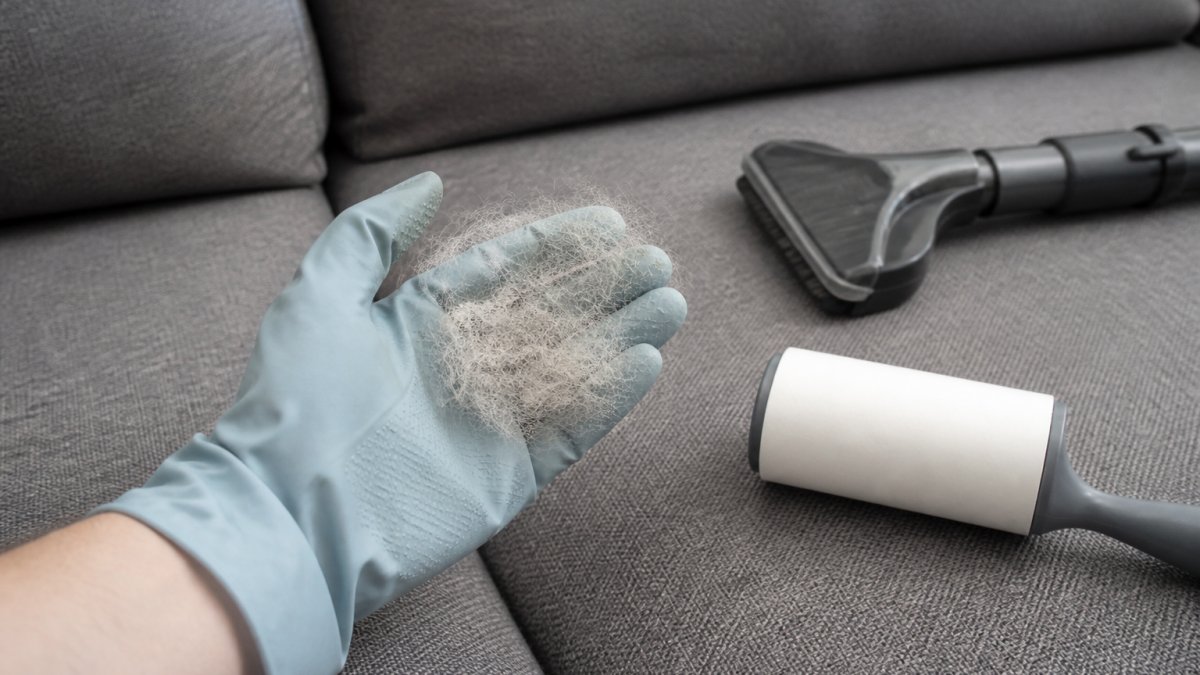
Rubber gloves work because the textured surface grabs hair through friction. Dampen the glove slightly with water. Swipe in one direction across the fabric. Hair bunches up in your palm as you go.
This method is best for:
- Light pet hair on cloth couches
- Quick cleanup before guests arrive
- Furniture with short-pile fabric
- Spot cleaning specific areas
The downside: it's slow for large surfaces. A full sectional takes 20 minutes or more. Damp gloves also risk leaving moisture on delicate fabrics. Always test on a hidden corner first.
Rubber gloves cost almost nothing and last indefinitely. They're ideal for renters or anyone hesitant to buy specialty tools.
Sticky Lint Rollers for Fast Touch-Ups
Standard disposable lint rollers grab surface hair quickly. Roll over the fabric in one direction. The sticky paper collects pet fur, dust, and lint. Peel off and discard when full.
Best for:
- Small couches and armchairs
- Spot cleaning before sitting down
- Quick fixes on cloth upholstery
- Travel or temporary solutions
Limitations: disposable rollers run out fast and create waste. One lint roller handles maybe 10-15 swipes before needing replacement. For a large sectional, you'll burn through multiple rollers.
The MN AMERICA Reusable Lint Roller solves this problem. It works like a standard roller but the sticky surface resets when you clean it. No refills to buy. No trash to throw away. One tool handles your entire couch, then works on clothes, car seats, and more. At $14.99, it pays for itself after a few uses.
Squeegee Technique on Fabric Surfaces
A rubber squeegee (the kind used for car windows) works surprisingly well on upholstery. Push it across the fabric surface in one direction. Pet hair bunches up in front of the squeegee blade. Collect the gathered hair and repeat.
This works best on:
- Larger flat surfaces (sectional cushions, ottoman tops)
- Cloth upholstery with medium pile
- Stubborn hair that lint rollers miss
- Deep cleaning sessions
The squeegee approach takes patience but covers ground quickly. It's especially effective on microfiber and canvas fabrics. Avoid using it on delicate velvet or suede, the pressure can damage the nap.
How to Vacuum Pet Hair From Upholstery
Vacuuming removes pet hair more thoroughly than manual methods alone. The suction pulls hair from deep within fabric fibers. Most vacuums come with upholstery attachments designed for this job.
Use the upholstery attachment, not the main floor brush. The attachment is smaller and designed to fit between cushions. Make slow, overlapping passes. Go in multiple directions to catch hair at different angles.
Best practices:
- Vacuum weekly to prevent buildup
- Use slow, deliberate strokes
- Don't rush, let suction do the work
- Empty the canister before it gets full
- Check the attachment for clogs
For stubborn pet hair, combine methods. Use a rubber glove or squeegee first to loosen embedded fur. Then vacuum to remove loosened hair. This two-step approach gets better results than either method alone.
Some pet owners use handheld vacuums for quick cleanups. These work for spot cleaning but lack the suction power of full-size models for deep cleaning. A cordless handheld is convenient but battery life limits how much you can clean at once.
Choosing the Best Pet Hair Remover for Furniture
Not all tools work equally well. Your choice depends on couch size, fabric type, how much pet hair you deal with, and your budget.
Reusable vs. Disposable Lint Rollers
Disposable lint rollers are cheap upfront but expensive over time. A pack of 10 costs $5-10. You'll replace them constantly if you have pets.
Reusable lint rollers cost more initially but last years. The MN AMERICA Reusable Lint Roller ($14.99) works on clothes, furniture, and car seats. The sticky surface never wears out, just clean it and reuse. For pet owners, this is the smarter choice.
Disposable rollers make sense only if you rarely deal with pet hair. For regular use, reusable wins on cost and convenience.
Manual Tools vs. Powered Vacuums
Manual tools (gloves, squeegees, lint rollers) require effort but are quiet and portable. They work well for light to moderate pet hair.
Powered vacuums handle heavy shedding better. Suction pulls hair from deep fibers. They're faster for large furniture. The downside: they're louder, take up storage space, and cost more.
For most pet owners, a combination approach works best:
- Use manual tools for quick daily touch-ups
- Vacuum weekly for deeper cleaning
- Use both methods together for stubborn hair
How to Remove Pet Hair From a Couch
Couches collect more pet hair than any other furniture. The reasons: pets spend hours on them, fabric texture traps hair, and cushions create crevices where hair hides.
Start with the cushions. Remove them if possible. Use a lint roller or squeegee on both sides. Vacuum the exposed frame and crevices. Pet hair often hides in seams and under cushions.
Then tackle the back and sides. Use slow, deliberate strokes with whatever tool you choose. Go over each area twice, once in each direction.
Finally, vacuum the entire couch thoroughly. Use the upholstery attachment. Get into corners and between cushions. This final pass removes loosened hair and dust.
Fabric-Specific Cleaning for Microfiber and Delicate Fabrics
Microfiber couches are popular because they resist stains. They also trap pet hair. Use gentle pressure with any tool. Microfiber fibers are delicate and can mat if you scrub too hard.
Best approach for microfiber:
- Use a lint roller with light pressure
- Vacuum with the upholstery attachment on low suction
- Avoid dampening the fabric
- Don't use squeegees on microfiber, the pressure damages it
Velvet and suede couches need extra care. These fabrics are easily damaged by friction. Never use a squeegee or hard brush.
For velvet and suede:
- Use only rubber gloves with very light pressure
- Vacuum on low suction with the upholstery attachment
- Test any method on a hidden area first
- Consider professional cleaning for heavy buildup
Delicate fabrics benefit from prevention. Use furniture covers or throws where pets sleep. This protects the couch and makes cleanup easier.

Handling Stubborn and Embedded Hair
Hair that's been sitting for weeks embeds deep in fabric. It won't come out with a simple lint roll. You need a multi-step approach.
Step 1: Loosen the hair. Use a rubber glove with damp fingers or a squeegee. Push firmly but not aggressively. Work the hair toward the surface.
Step 2: Gather loosened hair. Use a lint roller or your gloved hand to collect the hair you've loosened.
Step 3: Vacuum thoroughly. Use the upholstery attachment with steady pressure. Make multiple passes in different directions.
Step 4: Repeat if needed. Stubborn hair sometimes requires two or three rounds of this process.
This approach works on most fabrics. For delicate materials, skip step 1 and go straight to gentle vacuuming.
Complete Cleaning Workflow: Step-by-Step
A systematic approach removes more pet hair and prevents damage to your furniture. Follow this workflow for best results.
Step 1: Prepare (5 minutes) Remove cushions if possible. Gather your tools: lint roller, rubber gloves, squeegee, and vacuum. Have a trash bag ready for collected hair.
Step 2: Manual removal (10-20 minutes) Use your lint roller or rubber gloves to remove surface hair. Work in one direction. Make overlapping passes. For stubborn hair, use the squeegee technique.
Step 3: Vacuum (10-15 minutes) Use the upholstery attachment. Make slow, deliberate passes. Go over each area at least twice, once in each direction.
Step 4: Second pass if needed (5-10 minutes) For heavily soiled couches, repeat steps 2 and 3. Pet hair sometimes requires multiple passes to fully remove.
Step 5: Reassemble (5 minutes) Replace cushions. Fluff and arrange. Your couch is now clean and ready to use.
Total time: 35-60 minutes depending on couch size and hair buildup.
Preventing Pet Hair Buildup on Upholstery
Prevention is easier than deep cleaning. A few simple habits keep pet hair from accumulating.
Weekly maintenance:
- Lint roll or vacuum your couch once a week
- This removes fresh hair before it embeds
- Takes 10-15 minutes and prevents major buildup
Use furniture covers:
- Throws or slipcovers protect fabric underneath
- They're washable and replaceable
- Pets often prefer sleeping on covers anyway
Groom your pet regularly:
- Brush or bathe your pet outside when possible
- Loose fur goes outside instead of on furniture
- Regular grooming reduces shedding overall
Designate pet zones:
- Give your pet a specific chair or bed
- Confine shedding to one area
- The rest of your furniture stays cleaner
Wash pet bedding weekly:
- Reduces hair transfer to your couch
- Keeps your pet more comfortable
- Takes minutes in the washing machine
These habits take minimal effort but dramatically reduce pet hair on upholstery. Combined with quick weekly cleaning, your couch stays clean without major deep-cleaning sessions.
The MN AMERICA Reusable Lint Roller makes weekly maintenance fast and easy. Keep one on your couch. Use it for 30-second touch-ups whenever you notice hair. The reusable design means you'll actually use it regularly, no guilt about wasting disposable rollers.
Removing pet hair from upholstery doesn't require expensive equipment or professional help. The right tools and a consistent routine keep your couch clean and comfortable. Start with a reusable lint roller for quick daily touch-ups.
The MN AMERICA Reusable Lint Roller ($14.99) handles most pet hair removal needs and works on clothes and car seats too.
Frequently Asked Questions
What is the best way to remove stubborn pet hair from a fabric couch?
Start with a rubber glove, dampen it slightly and swipe in one direction to gather embedded hair. Follow with a reusable lint roller to catch remaining fibers, then vacuum with an upholstery attachment. For stubborn hair, repeat the glove step multiple times. Avoid moisture-heavy methods on delicate fabrics like velvet or microfiber; test any spray or dampening on a hidden area first.
How often should I vacuum my couch to prevent pet hair buildup?
Vacuum your couch weekly if you have shedding pets, or every other week for light shedding. Weekly maintenance prevents hair from becoming embedded and keeps your upholstery cleaner overall. Between vacuuming, use a lint roller or rubber glove for quick touch-ups. Regular cleaning is easier and faster than deep cleaning stubborn buildup.
What tools work best for removing pet hair from upholstery?
The most effective approach combines multiple tools: rubber gloves (especially damp ones) for gathering loose hair, a reusable lint roller like the MN AMERICA Reusable Lint Roller ($14.99) for quick cleanups, and a vacuum with an upholstery attachment for deep cleaning. A squeegee also works well on fabric surfaces. The best tool depends on hair type, fabric, and how embedded the hair is.
Can I use vinegar or other sprays to remove pet hair from upholstery?
Vinegar and fabric sprays can help loosen pet hair, but use them cautiously. Always test sprays on a hidden seam or corner first, especially on delicate fabrics like microfiber or velvet. Avoid oversaturating, moisture can damage upholstery or leave stains. For most situations, dry methods like rubber gloves and lint rollers are safer and equally effective without risk to your furniture.