


Smart Dog Bowl: Features That Matter in 2026
Table of Contents
- What Is a Smart Dog Bowl and How Does It Work?
- Types of Smart Dog Bowls and Feeders
- Key Features to Evaluate in a Smart Dog Bowl
- Smart Bowl vs. Automatic Feeder: Which Fits Your Needs?
- Common Mistakes When Choosing a Smart Dog Bowl
- Suitability by Dog Size, Age, and Feeding Behavior
- Maintenance, Food Safety, and Long-Term Reliability
- Frequently Asked Questions
Last Updated: October 19, 2026
What Is a Smart Dog Bowl and How Does It Work?
A smart dog bowl is an automated feeding device that combines portion control, scheduling, and data tracking. Unlike traditional bowls, smart bowls connect to mobile apps, store feeding data, and often include automatic dispensing, portion measurement, and sometimes built-in cameras for monitoring your dog's eating habits.
Most smart dog bowls work through one of two mechanisms: gravity-fed systems that dispense food as your dog eats, or timed automatic feeders that release measured portions at scheduled intervals. The bowl connects to your home Wi-Fi network, sending real-time updates about when your dog ate, how much they consumed, and sometimes photos or video of mealtime, helping you track nutrition and eating patterns over time.
The appeal is straightforward: less manual scooping, consistent portion sizes, and the ability to feed your dog remotely. If you're managing multiple pets, traveling, or monitoring a dog's diet for health reasons, a smart dog bowl removes daily friction from a routine task.
Types of Smart Dog Bowls and Feeders
Each type of smart feeder solves different problems, so knowing the trade-offs matters before you buy.
Wi-Fi-Connected Bowls with Mobile App Monitoring
Wi-Fi-connected smart dog bowls are the most feature-rich option. They sync with smartphone apps that let you monitor feeding in real time, adjust portion sizes remotely, and review historical eating data.
These bowls work best if you want detailed nutrition insights or need to feed your dog while away. The app typically shows meal timestamps, portion sizes, and alerts if your dog hasn't eaten at their scheduled time. Some models integrate with Alexa or Google Home.
The trade-off: Wi-Fi models cost more, require reliable internet, and depend on app updates. If your Wi-Fi drops, the bowl usually reverts to manual feeding mode. Setup can be frustrating if your router doesn't reach your feeding area.
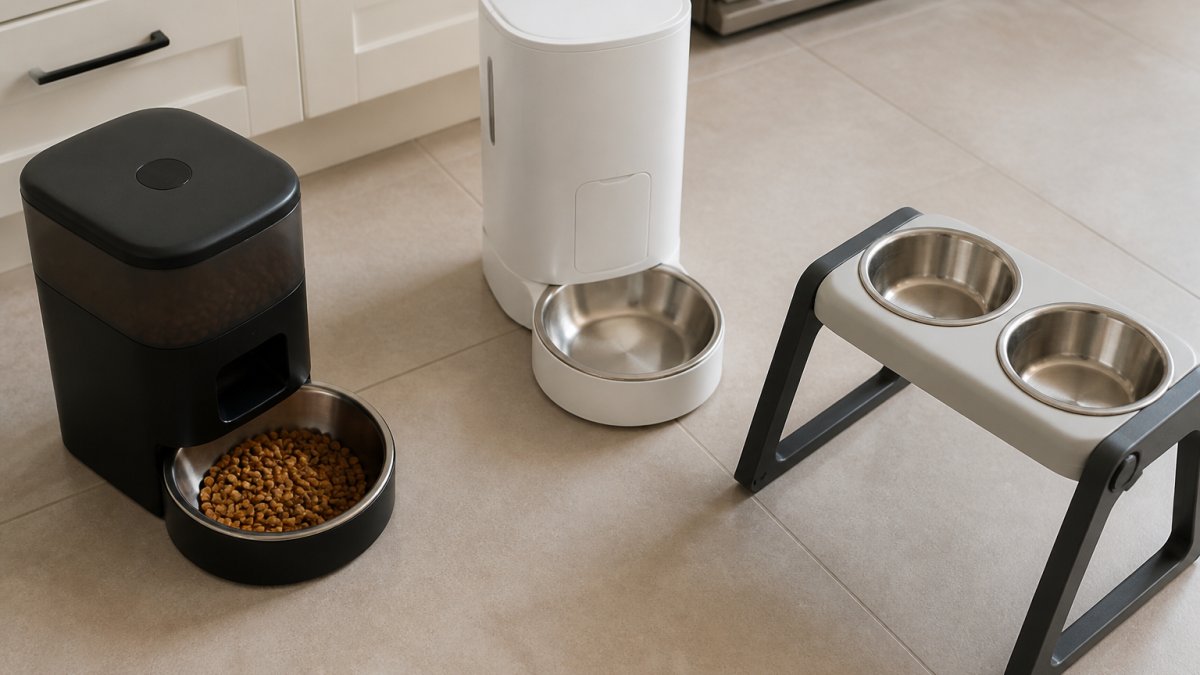
Automatic Dog Feeder with Portion Control
Automatic feeders with portion control are simpler than Wi-Fi models but still eliminate manual scooping. They hold large quantities of dry food and dispense measured portions on a timer. You set the portion size and schedule once, and the feeder handles the rest.
This category appeals to busy pet owners who want consistency without app management. Many models feature adjustable portion sizes, and some include backup batteries so feeding continues during power outages.
The limitation is lack of real-time monitoring. You won't see whether your dog actually ate, how fast they finished, or intake trends. If something goes wrong, you may not know until you check manually. For dogs with stable appetites, this simplicity is an advantage.
Microchip Dog Feeder for Multi-Pet Homes
Microchip dog feeders use your dog's existing microchip or collar tag to unlock the feeder, allowing only that specific dog to access the food inside. This solves a real problem for multi-pet households: preventing one dog from eating another's food, managing different diets, or protecting food from cats.
The feeder reads your dog's microchip as they approach, unlocks automatically, and closes when they leave. This works without Wi-Fi or apps, making it reliable and low-maintenance. It's useful if one dog needs a prescription diet or portion control while others eat freely.
The drawback: microchip feeders don't provide portion control or scheduling. They're designed purely for access management, so you still fill the bowl manually and monitor intake yourself. If your dog doesn't have a microchip, you'd need one implanted first.
Slow Feeder Dog Bowl Options
Slow feeder bowls prevent gulping and bloat by forcing your dog to eat more deliberately. They feature ridges, mazes, or compartments that require your dog to work around obstacles to reach the food. Some are manual; others are automated with slow-release mechanisms.
Slow feeders matter if your dog eats too quickly, has a sensitive stomach, or is prone to bloat. Eating more slowly can improve digestion and reduce the risk of gastric dilatation-volvulus, a serious condition in deep-chested breeds.
The trade-off: slow feeders take longer to clean because ridges and compartments trap food particles. For most dogs, a basic non-smart slow feeder bowl is sufficient and far cheaper.
Key Features to Evaluate in a Smart Dog Bowl
Knowing which features matter for your situation prevents overpaying for bells you won't use and missing features you actually need.
Portion Measurement and Feeding Accuracy
Portion accuracy is critical if you're managing your dog's weight or following a veterinary diet plan. The best smart bowls measure portions to within a few grams using load cells or weight sensors.
Look for bowls that let you set custom portion sizes rather than preset increments. If your vet recommends 1.5 cups per meal, you should be able to set exactly that, not just "small," "medium," or "large." Check whether portions display in grams, ounces, or cups.
Also verify how the feeder dispenses: does it measure before releasing, or estimate based on motor runtime? Pre-measured release is more accurate; runtime estimates can drift as the motor ages or food density changes.
App Connectivity and Data Tracking
If you're paying for Wi-Fi connectivity, understand what data the app actually provides. Basic apps show feeding timestamps and portion sizes; advanced ones add weight trends, eating duration, missed meals, and sometimes video clips.
Consider how long the company stores your data. Some apps keep 30 days of history; others archive indefinitely. If you're tracking health trends over months, limited history is a real limitation.
Also check the app's reliability. Read reviews about crashes, connection drops, or bugs. A smart bowl is only useful if the app works consistently; frequent crashes or rare updates are warning signs.
Material Quality and Cleaning Requirements
Smart bowls with electronics require more careful cleaning. Most have removable stainless steel or ceramic food bowls that are dishwasher-safe, but the base unit with the motor and sensors usually needs hand-washing only.
Check if the bowl is fully sealed against moisture, since water and food particles can damage electronics that seep into gaps. Stainless steel resists rust and staining better than plastic. If there's a camera, verify the lens is protected and easy to clean.
Raised feeders reduce strain on your dog's neck and joints, which matters for older dogs or large breeds. If your dog is a heavy eater or a large breed, confirm the bowl can handle their size without tipping or jamming.
Smart Bowl vs. Automatic Feeder: Which Fits Your Needs?
The choice depends on what you actually need to solve.
Choose a smart dog bowl if:
- You want real-time data about your dog's eating habits
- You need to manage multiple dogs with different diets
- You're monitoring your dog's health and want detailed intake records
- You want to feed your dog remotely while traveling
- Your dog has a medical condition requiring precise portion tracking
Choose a basic automatic feeder if:
- You want simplicity and reliability without app dependency
- Your dog has a stable appetite and no special dietary needs
- You're feeding one dog with consistent portions
- You prefer not to rely on Wi-Fi connectivity
- You want to minimize cleaning complexity
The honest truth: for most dogs, a basic automatic feeder with portion control solves the actual problem, reducing manual scooping and ensuring consistent portions. App monitoring is nice but not essential unless you have a specific reason to track eating data. If your dog eats normally and you just want to simplify your routine, a smart dog bowl is probably overkill.
Common Mistakes When Choosing a Smart Dog Bowl
Avoiding these predictable errors saves money and frustration.
Overestimating how much data you'll actually use. Many buyers assume they'll obsessively track eating patterns, but most check the app once or twice and then ignore it.
Assuming Wi-Fi connectivity will always work. Smart bowls depend on stable internet. If your router is far from your feeding area or your Wi-Fi is unreliable, app features become frustrating.
Choosing based on design rather than functionality. A beautiful smart bowl that jams frequently or has a terrible app is worse than an ugly one that works reliably. Read reviews focused on reliability, not aesthetics.
Forgetting about long-term maintenance costs. Some smart bowls require replacement parts, sensors, motors, seals, that are expensive or hard to find. Check parts costs and whether the company still supports older models before committing.
Not considering your dog's actual eating speed. If your dog eats very quickly, a standard smart bowl may not dispense fast enough. If your dog eats slowly, a fast-dispensing feeder will overflow.
Suitability by Dog Size, Age, and Feeding Behavior
Your dog's characteristics should drive your choice.
Small dogs (under 20 pounds): Small dogs need smaller portion increments and lower weight capacity. Elevated feeders designed for small breeds reduce neck strain.
Large and giant breeds (over 60 pounds): These dogs need heavy-duty bowls with higher weight capacity and fast-dispensing mechanisms. Elevated feeders reduce joint stress.
Senior dogs (over 7 years): Older dogs benefit from elevated feeders that reduce neck and joint strain. Portion tracking matters more if appetite is declining or dietary restrictions apply.
Puppies: Puppies need frequent, small meals, so a smart bowl with precise portion control and multiple daily schedules is useful. Microchip feeders don't work well since puppies may not have microchips yet.
Dogs with medical conditions: If your dog has diabetes, kidney disease, or obesity, portion accuracy and intake tracking matter significantly.
Fast eaters prone to bloat: These dogs absolutely need slow feeders. A slow-feed mechanism can literally save your dog's life by reducing the risk of gastric dilatation-volvulus.
Maintenance, Food Safety, and Long-Term Reliability
Long-term reliability depends on maintenance and build quality.
Cleaning and food safety: Most smart bowls have removable stainless steel or ceramic food bowls that are dishwasher-safe.
Store dry food in airtight containers rather than leaving it in the hopper for weeks; stale food can develop mold or mites, especially in humid climates. Empty and clean the hopper weekly.
Battery and power backup: Some models have battery backup that keeps the feeder operational for a few days; others require manual feeding during outages.
Warranty and support: Check the warranty length and what it covers, motor failure, sensor malfunction, and how long the company supports older models with app updates.
Longevity of electronic components: Motors, sensors, and Wi-Fi modules can fail over time. Read long-term user reviews to see how these devices hold up after 2-3 years of daily use.
Choosing the right smart dog bowl means matching the device's features to your dog's actual needs and your household's routines.
Frequently Asked Questions
What is a smart dog bowl, and how does it work?
A smart dog bowl is an automated feeding system that dispenses meals on a schedule and tracks your dog's food and water intake through a mobile app. Most models use Wi-Fi connectivity, portion measurement sensors, and meal scheduling features to help monitor your dog's eating habits and nutrition. Some include cameras so you can watch your pet eat remotely. They range from simple automatic feeders to advanced bowls with real-time dietary data tracking.
Can a smart dog bowl track how much my dog eats?
Yes, most smart dog bowls include portion measurement and food intake monitoring. They weigh the food dispensed and track consumption over time, sending data to a mobile app. This helps you monitor your dog's daily feeding data and detect changes in eating habits that might indicate health issues. Accuracy varies by model, so check reviews and specifications before purchasing to ensure the tracking meets your needs.
Are smart dog bowls suitable for dogs that eat too quickly?
Yes, if you choose a slow feeder dog bowl model. These bowls have internal barriers or maze-like patterns that force your dog to eat more slowly, reducing the risk of bloating and indigestion. Some automatic feeders also allow you to set smaller portion sizes and more frequent meal intervals, which slows consumption. Combining a slow feeder design with portion control creates an effective solution for fast eaters.
How do I clean and maintain a smart dog bowl?
Most smart dog bowls have removable stainless steel or plastic bowls that are dishwasher-safe. The feeder base typically requires hand-washing and should never be submerged. Empty the food storage compartment regularly to prevent spoilage, and wipe the dispenser mechanism with a dry cloth. Check the manufacturer's instructions for battery or charging maintenance. Regular cleaning prevents mold, bacteria buildup, and ensures long-term reliability and food safety.