


How Can You Simplify Daily Pet Supply Routines?
Last Updated: October 26, 2026
Quick Summary
Simplify daily pet supply routines by creating a checklist of essential tasks, setting up organized feeding and water stations, establishing reorder thresholds so supplies arrive before running out, and automating what you can while maintaining visual checks on your pet's health and behavior.
- Create a daily checklist covering feeding, water, bathroom breaks, exercise, and medications to prevent forgotten tasks.
- Feed at the same time every day and change water at least twice daily to support digestion and prevent bacterial growth.
- Set reorder thresholds based on usage rate, for example, reorder dry food when one-third remains so new supply arrives before running out.
- Use storage zones with labeled clear bins organized by category near where you use each supply type.
- Automate feeding, water, or deliveries as backup tools, but keep daily visual checks to notice changes in appetite or behavior.
Table of Contents
- Why Consistent Daily Pet Supply Routines Matter
- Building Your Pet Care Checklist
- Step 1: Set Up Feeding and Water Stations
- Step 2: Organizing Pet Supplies for Easy Access
- Step 3: Master Cat Litter Management
- Step 4: Establish Exercise and Playtime Blocks
- Step 5: Create a Weekly Restocking and Cleaning System
- Adapting Routines to Your Pet's Needs and Your Schedule
- Frequently Asked Questions
Why Consistent Daily Pet Supply Routines Matter
A solid daily pet supply routine keeps your pet healthy and your home organized. When feeding, water, exercise, and playtime follow a predictable schedule, pets feel calmer and more secure, and you'll spot changes in appetite or behavior right away.
Building Your Pet Care Checklist
Start with a simple checklist of daily tasks: feeding, fresh water, bathroom breaks, exercise, playtime, and any medications or supplements. It keeps you from forgetting steps and helps anyone else caring for your pet stay on track.
Your checklist might look like this:
- Morning: Feed, fresh water, bathroom break, 15-minute walk
- Midday: Bathroom break, water refill, quick play session
- Evening: Feed, fresh water, bathroom break, 20-minute walk or play
Print or save it on your phone, and review it weekly based on your pet's age and needs.
Step 1: Set Up Feeding and Water Stations
Pick a quiet, low-traffic area away from your pet's sleeping space, pets prefer eating and drinking away from where they rest.
Establishing a Pet Feeding Schedule
Feed at the same time every day, consistency helps digestion and bathroom habits. Most adult dogs do well with two meals daily; cats often prefer multiple small meals, but two work fine.
Set a timer for feeding times, and follow label guidelines based on weight and activity level, overfeeding leads to weight gain and health problems.
Keep dry food in an airtight container near the feeding station, labeled with the food type and expiration date.
Fresh Water Access Throughout the Day
Fresh water should be available all day. Change it at least twice daily, more often in warm months, since stale water harbors bacteria and discourages drinking.
Use a heavy ceramic or stainless steel bowl that won't tip, and place the water bowl separate from the food bowl, pets naturally prefer this. Explore smart dog bowl features that can automate and simplify your daily feeding routine.
For pets that travel with you, the Portable Pet Water Bottle is designed for walks, hikes, and road trips.

Consider a second water bowl in another room, some pets drink more when water is easily accessible.
Step 2: Organizing Pet Supplies for Easy Access
Scattered supplies waste time and create frustration. A good system stores everything within arm's reach of where you use it.
Storage Zones for Different Supply Types
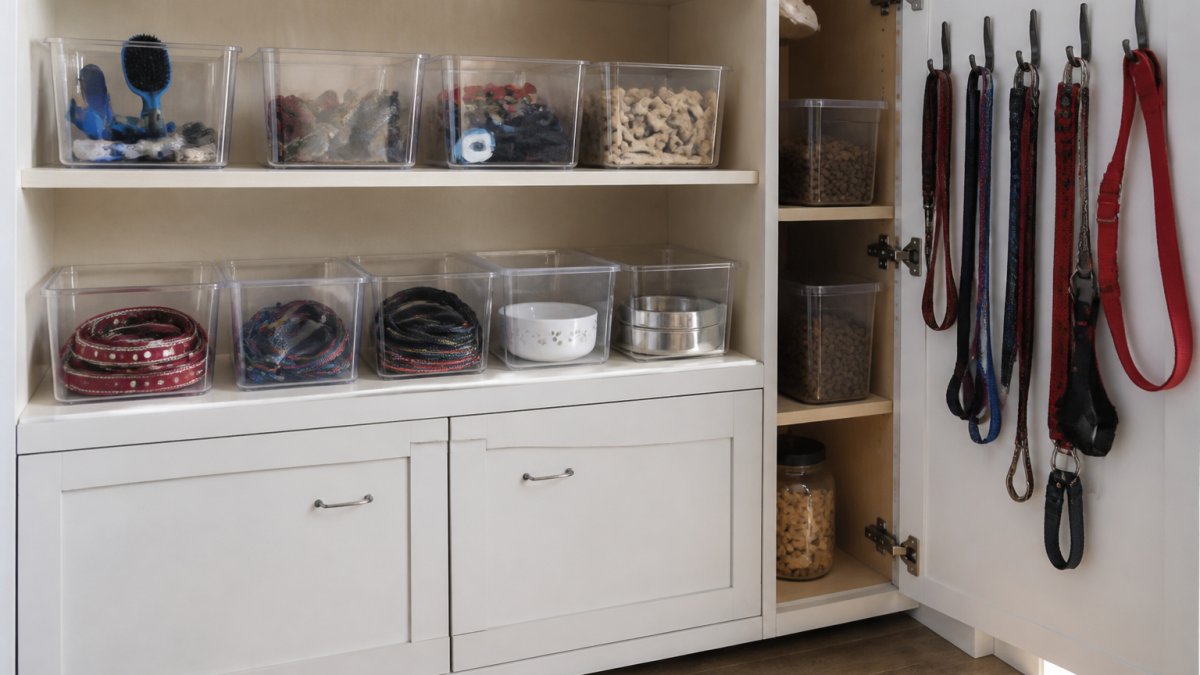
Create zones by category: feeding supplies near the food bowls, grooming tools in one spot, medications and first-aid items together, and toys in their own bin.
Label each zone and use clear plastic bins so you can see contents without opening them, when a bin looks low, it's time to refill. A foldable pet tent can serve as a dedicated storage and containment zone for your pet care items.
Vertical storage saves space: wall-mounted shelves, over-the-door organizers, and hanging bins keep supplies off the floor, easy to grab, and away from pets who might chew on them.
Space-Conscious Organization for Small Homes
Small apartments need smarter storage. Use under-bed containers for seasonal or backup supplies, and hang a shoe organizer on a closet door for small items like grooming gloves, treats, and toys.
A rolling cart with drawers works well in tight spaces, each drawer holds a different supply type, and you can wheel it where you need it.
Avoid duplicates, one set of bowls, one brush, one collar. Buy only what you actually use.
Step 3: Master Cat Litter Management
Cat litter management is one of the biggest daily pet supply challenges.
Scoop litter daily, preferably twice, this keeps odors down and prevents litter box avoidance.
Change litter completely once weekly to remove waste and odor scooping can't handle, and wash the box with mild soap and water during the full change.
Keep at least two backup litter bags on hand so you're never caught without supply.
Step 4: Establish Exercise and Playtime Blocks
Exercise and mental stimulation are essential daily pet supply routines, a tired pet is a well-behaved pet.
Morning walks energize your pet; evening walks burn off energy and promote better sleep.
Playtime provides mental stimulation and bonding. Use toys that match your pet's interests and energy level, and rotate them weekly to keep them fresh.
Keep toys accessible but organized. A basket or bin near your main living space makes grab-and-play easy.
Step 5: Create a Weekly Restocking and Cleaning System
A restocking system prevents you from running out of critical supplies. Dedicate one day each week to inventory and restocking. Sunday works well for most households. The difference between a system that works and one that collapses is whether you set concrete reorder thresholds instead of eyeballing bins.
Setting Reorder Thresholds That Actually Work
A reorder threshold is the level at which you place the next order, not the level at which you run out. Set the threshold so a new supply arrives before the old one is gone.
- Dry food: If your pet eats about one cup a day and a bag holds 24 cups, the bag lasts roughly 24 days. With a five-day shipping window, reorder at about eight cups remaining, roughly one-third of the bag. Mark that line on the container with tape so anyone in the household can see it.
- Canned food and wet pouches: Count by the day, not the can. If you feed one can daily and order by the case, reorder when you open the second-to-last case.
- Litter: For one cat, a 20-pound box of clumping litter typically lasts two to three weeks with daily scooping and weekly full changes. Reorder at the one-week mark, not when the box is empty.
A simple tracking method beats an elaborate app you stop using. A whiteboard on the inside of a pantry door, a shared phone note, or a printed inventory sheet clipped to the supply shelf all work.
Automation and Delivery: What Helps and What Doesn't
Automatic feeders, water fountains, and subscription deliveries can reduce daily friction, but each has trade-offs worth understanding before you rely on it.
- Automatic feeders work well for portioned dry food on a fixed schedule and are useful when you work late or travel. They are less reliable for wet food, for pets on prescription diets that must be measured precisely, and for multi-pet homes where one pet steals another's portion. Always test a new feeder for a week while you are home before trusting it on a day you are away.
- Water fountains encourage drinking because moving water stays fresher and is more appealing to many pets. The trade-off is cleaning: most manufacturers recommend disassembling and cleaning the pump and basin weekly, and filters need replacing on the schedule printed on the packaging. A fountain you don't clean is worse than a bowl you rinse twice a day.
- Delivery subscriptions are the most reliable restocking tool for food and litter because they remove the reorder decision entirely. Set the delivery interval slightly shorter than your actual usage cycle so you build a small buffer rather than a stockpile. Review the subscription quarterly, pets' consumption changes with age, season, and diet changes.
Medication and Preventive-Care Tracking
Medications and preventives are the supplies most often missed because they don't sit in a visible bin. Build a simple tracking system:
- A dose log. A paper calendar or phone note with the date, time, dose, and pet name. For multi-pet homes, use a different color per pet.
- A refill date. Write the refill-by date on the calendar the day you open a new package, not the day you remember.
- An appointment reminder. Schedule the next wellness visit before you leave the current one, and set a phone reminder two weeks ahead for any preventive that requires a prescription renewal.
- A travel kit. A small pouch with two days of medication, a copy of the prescription label, and a note of your veterinarian's phone number.
Always follow your veterinarian's instructions on dosing and timing. A tracking system supports the plan your vet sets; it does not replace it. If a dose is missed or a pet refuses medication, call your vet rather than doubling up or guessing.
Cleaning and Maintaining Pet Equipment
Clean bowls, toys, and bedding weekly. Food bowls need hot soapy water to prevent bacteria growth.
Pet bedding should be washed every one to two weeks. Use pet-safe detergent and warm water. Clean bedding prevents odors and reduces allergens.
The Five-Finger Pet Grooming Glove is designed for pet bathing, massage, and loose-fur grooming.

Check equipment for damage weekly. Frayed leashes, cracked bowls, and torn toys need replacement.
Set reorder thresholds based on how quickly your pet uses each supply so you never run out.
| Supply | Usage Rate | Reorder Threshold |
|---|---|---|
| Dry food | One cup daily | At one-third of bag remaining |
| Canned or wet food | One can daily | When opening second-to-last case |
| Litter | One cat, 20-pound box | At one-week mark of use |
| Waste bags | One roll in use | When spare roll is opened |
| Monthly preventive | Due on first of month | By the 20th of prior month |
| Grooming products | Varies by product | Note open date; follow label use-by window |
Adapting Routines to Your Pet's Needs and Your Schedule
Every pet is different. Age, breed, health status, and personality all affect daily routines. A young, energetic dog needs more exercise than a senior dog. A cat with diabetes needs medication at specific times. The routines that survive real life are the ones built to bend without breaking.
Species and Multi-Pet Adjustments
Dogs and cats get most of the routine advice, but the supplies and schedules differ substantially for other pets and for homes with more than one animal.
- Small mammals (rabbits, guinea pigs, hamsters): Fresh hay and water daily, cage spot-cleaning every one to two days, and full bedding changes weekly. Guinea pigs need a daily vitamin C source because they cannot synthesize it (ncbi.nlm.nih.gov). Hamsters are nocturnal, schedule handling and feeding in the evening, not the morning.
- Birds: Fresh water and food daily, cage paper changed daily, and a weekly deeper clean. Birds are sensitive to fumes and aerosols, so keep cleaning products away from the cage area.
- Reptiles: Feeding schedules vary widely by species, some eat daily, some weekly. Temperature and lighting timers matter more than feeding times for many reptiles, so put the lights on a timer before you build a feeding routine.
When the Routine Breaks: Realistic Reset Steps
Perfect consistency is not the goal, recovery is. A common pattern is a routine that works for months, then collapses after a schedule change, illness, or travel. Here is how to reset without starting over.
- Missed tasks: If you miss a walk or a feeding, do not double up to catch up. Restore the next scheduled task and note what was missed. For medications, call your vet before adjusting any dose.
- Schedule changes: Shift feeding and walk times by 15 to 30 minutes at a time over several days rather than jumping straight to a new time. Pets adjust to gradual changes far better than abrupt ones.
- Picky eaters: Rule out medical causes with your vet first. If the pet is healthy, try a consistent feeding window of 20 to 30 minutes, remove the bowl between meals, and avoid free-feeding if you need to track intake. Sudden food refusal lasting more than a day warrants a call to your vet.
Fitting Pet Care Into a Busy Owner's Schedule
Busy schedules don't mean you can't maintain good routines. Even 15 minutes of focused playtime and two daily meals at consistent times creates structure.
For pets with health issues, work closely with your vet. Medications, special diets, and restricted activity all affect your daily routine.
Seasonal changes affect routines too. Winter walks might be shorter but more frequent. Summer requires more water and shade.
Frequently Asked Questions
What should be on a pet care checklist for daily routines?
A pet care checklist should include feeding at set times, fresh water refills, bathroom breaks, exercise or walks, playtime with mental stimulation, grooming or brushing, and rest periods. For cats, add litter box cleaning. Review your checklist weekly to ensure all items are completed consistently and adjust based on your pet's age and health needs.
How do I organize pet supplies in a small apartment?
Use vertical storage like wall shelves or over-door organizers to maximize space. Keep daily essentials like food bowls, leashes, and grooming supplies in one accessible bin or caddy. Store bulk items in a closet or under-bed container. Use drawer dividers for smaller items like treats and toys. This approach keeps supplies visible and within reach without creating clutter.
What's the best pet feeding schedule to follow?
Set specific times and stick to them to help your pet's digestion and housetraining. Use a timer or phone reminder to keep feeding times consistent, which also makes it easier to track when you need to restock food supplies.
How can I make cat litter management less time-consuming?
Scoop daily at the same time each day, ideally in the morning or evening. Keep a small trash bin and litter scoop right next to the box for convenience. Stock extra litter bags nearby so you can top off the box immediately after scooping. Plan weekly deep cleaning to refresh the box completely.
